Yoli founded Sensual Matcha and has been drinking matcha for over 10 years. She tests every recipe on the blog until it works without a café machine.
Sieve, mix, pour. Ready in five minutes.
Pass 3 g of matcha through a fine sieve. Mix with a splash of water at 70 °C to make a smooth paste. Top up to 50 ml and whisk until frothy. Fill a tall glass with ice, pour in 150 ml of milk, then add the matcha shot on top. Can be made vegan.
- matcha (Ceremonial Blend), one heaped teaspoon 3 g
- water at 70 °C approx. 50 ml
- your choice of milk (oat, almond, whole or coconut) 150 to 160 ml
- ice cubes, preferably large
- maple syrup or honey optional
Soak the chasen (bamboo whisk)
Soak your whisk in warm water for about 30 seconds. This makes the bristles flexible. If you do not have a chasen, skip this step. I share alternatives below.
Sieve
Sieve 3 g of matcha, one heaped teaspoon, into a small bowl. Use a matcha bowl if you have one. It takes about ten seconds. Matcha can form lumps in the pouch, so sieving helps give your latte a smooth texture.
Make a paste
Add just a small splash of water at 70 °C, about 10 to 15 ml. Mix the matcha into a smooth, dark green paste. Once there are no lumps, add the remaining water to make 50 ml. Whisk with the chasen using M-shaped or W-shaped movements for 30 to 60 seconds, until a fine foam forms (microfoam).
Prepare the glass
Fill a tall glass with ice cubes, preferably large ones. If you are sweetening the drink, stir maple syrup or honey into the 150 to 160 ml of milk, then pour it over the ice. The next section explains why the sweetener goes into the milk for distinct layers.
Pour the matcha shot on top
Slowly pour the matcha shot over the ice cubes into the milk. The ice slows the pour so the matcha sits gently on top. This creates the green layer.
Stir & Enjoy
Before your first sip, stir briefly with a straw or spoon. Otherwise, you taste concentrated matcha first and mostly milk afterwards. Drink it while the ice is still solid, before it dilutes the latte.
I am Yoli, the founder of Sensual Matcha, and I like my matcha cold, with ice. I have been drinking matcha for over 10 years. Here is the ratio of milk to matcha I use, step by step. Our Ceremonial Blend is made for matcha lattes, with a full-bodied flavour that comes through in milk.
Prefer it warm? Here is my recipe for a warm matcha latte.
The recipe at a glance: Sieve 3 g of matcha, mix with a splash of water at 70 °C to make a smooth paste, then top up to 50 ml and whisk until frothy. Fill a tall glass with ice, pour in 150 ml of milk and add the matcha shot on top.
Ingredients for One Glass (250 ml)
Preparation time: 5 minutes · Makes: 1 glass · Can be made vegan
- 3 g of matcha (Ceremonial Blend), one heaped teaspoon
- 50 ml of water at 70 °C
- 150 to 160 ml of your choice of milk (oat, almond, whole or coconut)
- Ice cubes, preferably large
- Optional: a little maple syrup or honey
Equipment:
- Fine sieve
- Chasen (bamboo whisk), milk frother or a screw-top jar
- Tall glass, around 300 ml
Preparation in Six Steps
Step 1: Soak the chasen. Soak your whisk in warm water for about 30 seconds. This makes the bristles flexible. If you do not have a chasen, skip this step. I share alternatives below.
Step 2: Sieve. Sieve 3 g of matcha, one heaped teaspoon, into a small bowl. Use a matcha bowl if you have one. It takes about ten seconds. Matcha can form lumps in the pouch, so sieving helps give your latte a smooth texture.
Step 3: Make a paste. Add just a small splash of water at 70 °C, about 10 to 15 ml. Mix the matcha into a smooth, dark green paste. Once there are no lumps, add the remaining water to make 50 ml. Whisk with the chasen using M-shaped or W-shaped movements for 30 to 60 seconds, until a fine foam forms (microfoam).
Step 4: Prepare the glass. Fill a tall glass with ice cubes, preferably large ones. If you are sweetening the drink, stir maple syrup or honey into the 150 to 160 ml of milk, then pour it over the ice. The next section explains why the sweetener goes into the milk for distinct layers.
Step 5: Pour the matcha shot on top. Slowly pour the matcha shot over the ice cubes into the milk. The ice slows the pour so the matcha sits gently on top. This creates the green layer.
Step 6: Stir & Enjoy. Before your first sip, stir briefly with a straw or spoon. Otherwise, you taste concentrated matcha first and mostly milk afterwards. Drink it while the ice is still solid, before it dilutes the latte.
Why Use Water at 70 °C for a Cold Latte?
Water temperature matters when you make an iced latte. There are two things to consider.
Warm water helps you disperse the powder and whisk it into foam. The matcha shot is only a small part of the glass. It goes straight onto the ice and cools within seconds.
Use water at 70 °C. Boiling water can make matcha taste bitter. If your kettle has no temperature setting, boil the water and leave it to cool for 2 to 3 minutes. It will then be at around 70 °C.
I also share a cold-whisk alternative below.
How to Keep the Green and White Layers Separate
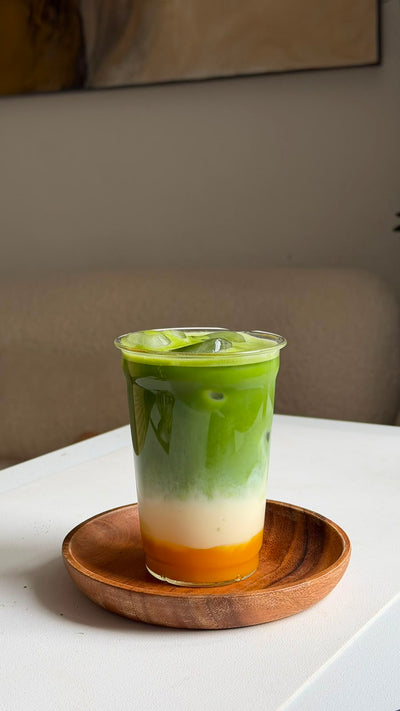
The layers come from the difference in density between the milk and the matcha shot, along with a slow pour.
Sweetened milk is denser than an unsweetened matcha shot, so it stays below. The lighter matcha sits on top. Add your sweetener to the milk. Sweetening the matcha can make the shot denser, so it sinks and the layers mix.
Three things help keep the layers distinct: large ice cubes, a slow pour and waiting to stir until you drink. Large cubes melt more slowly and give the matcha a surface to pour onto. I love watching the green matcha meet the milk. 😍
No Chasen? Try These Alternatives
A chasen makes a fine foam, but you can start with other tools.
The screw-top jar. Put matcha, water and one ice cube into an empty jam jar. Close the lid and shake firmly for 15 seconds. The ice cube helps break up lumps, as it does in a cocktail shaker. You can use this method at home or on the go.
The electric milk frother. A small handheld frother costs a few euros and creates foam in about ten seconds.
I recommend trying a bamboo whisk when you can. It makes a fine foam, and you can watch the texture develop as you whisk.
Choosing Your Milk
Milk makes up much of the drink, so its flavour and texture matter.
Oat milk is a popular choice. Naturally slightly sweet and creamy, it carries the matcha without overpowering it. A barista version makes a finer foam. Oat milk is a useful starting point.
Almond milk has a light texture, a nutty flavour and little natural sweetness. Try it if you want the matcha flavour to stay distinct.
Whole milk gives a creamy texture. Its fat content creates a rounded, full mouthfeel.
Coconut milk adds a light tropical note. It pairs well with fruit in drinks such as a strawberry matcha latte.
Pea milk (Vly or Sproud) is one of Yoli’s suggestions. Its flavour is distinctive, so try it first to see whether you like it.
Tip: Yoli likes mixing Alpro Barista Coconut and Oatly Barista.
The Cold-Whisk Method for a Creamier Latte
There is another way: mix the matcha with cold milk instead of water at 70 °C. Soak your chasen in water first. Dry bamboo bristles are brittle and can break if you use the whisk without soaking it.
Whisk 3 g of sieved matcha with 50 ml of cold milk until frothy. Cold milk takes longer to mix into a smooth, creamy texture. I like the extra creaminess. 😍
Fill your favourite glass with ice cubes. Add the milk, then pour the matcha on top. Stir once with a straw and it is ready.
Three Variations to Try
Use the basic recipe as a starting point for these three variations.
The vanilla variation: add a little vanilla extract to the milk before pouring it into the glass. You can also use vanilla soya or oat milk for a vanilla matcha latte.
The strawberry variation: mash or blend a handful of fresh strawberries. Add the purée to the bottom of the glass, followed by ice, milk and the matcha shot. Coconut milk adds a tropical note. Thawed frozen strawberries also work.
The cold foam variation: cold foam is the creamy topping you may know from cafés. Froth a little cream or plant-based cream with some milk and a pinch of matcha until it forms a dense foam. Spoon it onto your Iced Matcha Latte.
Cold foam is popular in cafés in London and Melbourne. You can make it at home with a milk frother.
Seven Common Iced Matcha Latte Mistakes
Check these seven points if your iced latte does not taste or look as you expected.
- Boiling water. Prepare your matcha with water at 70 °C. Water that is too hot can make it taste bitter.
- Choosing your matcha: the powder shapes the flavour. Look for a fine grind, a fresh green colour and a creamy, slightly sweet taste. Bitter, dull or grassy notes will also come through in your latte.
- Skipping the sieve. Sieve your matcha to remove lumps and get a finer, creamier texture.
- Too little matcha. With less than 2 g of matcha for 150 ml of milk, I find the flavour too faint. It also depends on the powder you use. Adjust the amount to your taste.
- Old or poorly stored matcha. Keep matcha airtight, dry, cool and away from light to preserve its fresh flavour and green colour.
- Sweetening the matcha rather than the milk. Adding syrup directly to the matcha can make the shot denser, so it sinks faster. For distinct layers, sweeten the milk. I drink mine without sweetener. 🤭
- Leaving it too long. Drink your iced matcha while it is fresh. As the ice melts, the drink becomes more watery and loses flavour.
I used to skip sieving and use too little matcha. Changing those two steps made a clear difference to the texture and flavour.
FAQ
Why use hot water if the latte is served cold?
Water at 70 °C helps disperse the matcha and makes it easier to whisk into foam. It brings out the umami, sweetness and rounded matcha flavour.
Can I prepare an Iced Matcha Latte the night before?
Make it fresh. Overnight, it loses aroma and can become slightly bitter. You can keep the milk chilled in the fridge beforehand.
Which milk should I use?
It comes down to taste. Yoli likes Oatly Barista, Vly Barista and Alpro Barista Coconut. She also likes matcha with coconut water. Choose coconut water with a flavour you enjoy.
How much caffeine is in an Iced Matcha Latte?
With 3 g of matcha, a glass contains around 42 to 108 mg of caffeine. In 2024, the Bavarian State Office for Health and Food Safety measured 14 to 36 mg per gram in 47 matcha samples.
Do I need a bamboo whisk?
You can start with a sealed screw-top jar and an ice cube, or an electric milk frother. A chasen creates a fine foam. Yoli recommends trying one. We will soon offer one in our shop.
Why is my matcha lumpy even after sieving?
Try the paste method. First mix the matcha with a small amount of water to make a smooth paste, then add the rest. Lumps are easier to work out in a small amount of water.
Ceremonial Blend Matcha
Our Ceremonial Blend from Aichi is made for matcha lattes. Creamy, full-bodied and slightly nutty. From the first spring harvest in Japan.